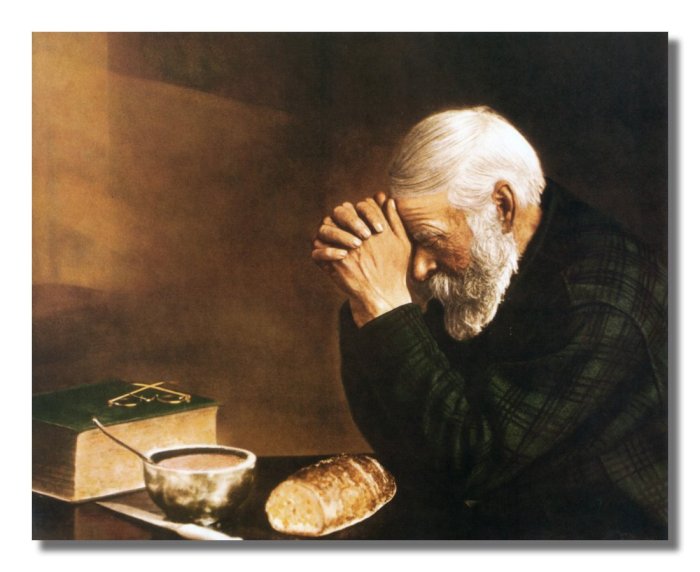
Preparing For Worship

church-law-theme@2x

It is time once again to prepare our hearts for worship. I want to go back to Proverbs 4:23 which I have mentioned before, but I feel it is so applicable to these preparing for worship post. Proverbs 4:23 says: “Watch over your heart with all diligence, For from it flow the springs of life.” As Joe Thorn says that to watch over your heart ‘is your primary business as a Christian, and it cannot be done with passing interest or any small amount of energy. It requires the consistent use of all the means of grace. You must make the most of worship, Scripture, prayer, and the church gathered in all its forms with an aim at keeping your heart and growing in grace.” It is so much easier to keep up appearances and not our hearts though. It is easy just to slap on a smile before stepping foot in Church, and keep up our external appearance. It is harder to work on our life internally.

When we prepare for worship we are working on our life internally. We confess and are broken over the remaining sin in our life. We preach the gospel to ourselves and remind ourselves that: “There is therefore now no condemnation for those who are in Christ Jesus.” We seek to see the glory of Jesus in the gospel. As John Piper says: “Seeing the glory of Jesus Christ in the gospel awakens joy.” A great place to see the glory of Jesus is the cross. Frederick Leahy said: “the cross…should be central in the thinking and experience of the individual Christian. It is my conviction, and at times my sad experience, that as the cross goes out of focus in the Christian’s life, coldness and backsliding set in.” When the cross goes out of focus in our lives our hearts will grow cold. Missionary Amy Carmichael wisely said: “From all that dims Thy Calvary, O Lamb of God, deliver me.” As we prepare for worship we want to bring the cross of Christ into sharp focus, we want to be delivered from anything that will dim the cross from our view.

As the song that we sang last week says: “At the cross You beckon me
You draw me gently to my knees, and I am
Lost for words, so lost in love,
I’m sweetly broken, wholly surrendered”

So, before I get to the text that Mark will be preaching on, I want to go to the cross. Mark 15 tells us that Jesus was crucified at the third hour, which was 9:00 am. Matthew 27 tells us that from noon “there was darkness over all the land until the ninth hour. 46 And about the ninth hour Jesus cried out with a loud voice, saying, “Eli, Eli, lema sabachthani?” that is, “My God, my God, why have you forsaken me?” 

Frederick Leahy says: “At Bethlehem, when the Saviour was born, the night was changed to day as the glory of the Lord shone around the shepherds. On Golgotha the day gave way to night…At Bethlehem there were countless angels praising God; on Golgotha legions of darkness filled the impenetrable gloom, hoping that darkness would finally triumph over light…At the creation, God, at an early stage, introduced light. Yet now he leaves his Son suspended in darkness at midday. Why must the light of the world be placed in darkness?…That darkness was a symbol of God’s wrath. Hendriksen says that God’s wrath was ‘burning itself out in the heart of Jesus.’  In that hour of blackness He had nothing, nothing but the guilt of sin of all those for whom He died. Utterly forsaken, He was cut off…Christ cried to God, but for Him there was no mercy; He had to bear the curse; He had no rights.” Jesus endured this darkness to redeem His people. At the cross we truly are ‘lost for words, so lost in love.’

Let us pray for the service tomorrow as we prepare our hearts for worship. Let us pray for Ian and Erin as they lead us in worship. Let us pray for Jerry as he leads us in a time of confession and let us pray for Mark who will open up Genesis 18 & 19 to us. Let us pray that God would stir up our affections for Him.

Links to Genesis 18 & 19 of the ESV text are below:

Genesis 18

Genesis 19


Picture from here

Digging Deeper

iceberg

It is time once again to dive down deeper into last weeks sermon. We started out in 1 Samuel chapter 1. The first 11 verses of 1 Samuel 1 are below:

“There was a certain man of Ramathaim-zophim of the hill country of Ephraim whose name was Elkanah the son of Jeroham, son of Elihu, son of Tohu, son of Zuph, an Ephrathite. He had two wives. The name of the one was Hannah, and the name of the other, Peninnah. And Peninnah had children, but Hannah had no children.

Now this man used to go up year by year from his city to worship and to sacrifice to the Lord of hosts at Shiloh, where the two sons of Eli, Hophni and Phinehas, were priests of the Lord. On the day when Elkanah sacrificed, he would give portions to Peninnah his wife and to all her sons and daughters. But to Hannah he gave a double portion, because he loved her, though the Lord had closed her womb. And her rival used to provoke her grievously to irritate her, because the Lord had closed her womb. So it went on year by year. As often as she went up to the house of the Lord, she used to provoke her. Therefore Hannah wept and would not eat. And Elkanah, her husband, said to her, “Hannah, why do you weep? And why do you not eat? And why is your heart sad? Am I not more to you than ten sons?”

After they had eaten and drunk in Shiloh, Hannah rose. Now Eli the priest was sitting on the seat beside the doorpost of the temple of the Lord. 10 She was deeply distressed and prayed to the Lord and wept bitterly. 11 And she vowed a vow and said, “O Lord of hosts, if you will indeed look on the affliction of your servant and remember me and not forget your servant, but will give to your servant a son, then I will give him to the Lord all the days of his life, and no razor shall touch his head.”

1 Samuel 1 tells us about a man named Elkanah who had two wives, Hannah and Peninnah. Mark did a great job talking about polygamy in the Bible and he made a short clip about polygamy in the Bible, which you can watch here. Peninnah has multiple children whereas Hannah has no children. This created great tension between the two women. Peninnah would provoke Hannah ‘grievously’ and she did so ‘year by year.’ Matthew Henry commenting on this portion of Scripture says that: “We ought to bear one another’s burdens, not add to them.” However, not only does Peninnah neglect to bear Hannah’s burden, she sought to increase Hannah’s burdens by irritating and provoking her.

What does Hannah do under all of these burdens? She is feeling the weight of not being able to have children. She watches as her rival Peninnah has child after child after child. She has dealt with Peninnah’s cruelty year after year. Under all of these burdens Hannah, being deeply distressed goes to the Lord in prayer. Verse 10 says: “She was deeply distressed and prayed to the Lord and wept bitterly.” This is a powerful verse and a great example of someone who took her dirty cup of water and just poured it all out at the throne of grace. We all need to learn from Hannah and take our sorrows and our pain and our tears to the Lord in prayer. We just need to be transparent before the Lord in prayer.

I haven’t suffered that much in my life, but I will share a brief story about a small amount of suffering I went through. It is not really even suffering, just a small scare. Before I got married I was living in a small city south of Atlanta and I came back to Watkinsville to see my parents and discuss wedding plans. My Mom wanted to go for a walk in the neighborhood and she asked me if  wanted to go. My Mom walks 3 miles every day and it is no joke to go walking with her. It is more like jogging. It was a nice day and we were walking rather quickly up a decent size hill in the neighborhood and all of a sudden I started having a hard time breathing. I got shortness of breath and I told my Mom that I had to stop. It was a little scary and my Mom was a little panicked. She told me to go to the doctor ASAP.

So, I rushed over to the Doctor’s office and got right in. They told me that they wanted to do an x-ray right away to make sure I didn’t have an enlarged heart or something serious. So, I went back to this dark room and they took some x-rays and then they left me alone as they went to examine the x-ray. Now in those few minutes that I was left alone in that x-ray room, do you think I was twiddling my thumbs? Do you think I was thinking about my dinner plans, or my favorite sports team? No, I was thinking about death and eternity, and I ran to the throne of grace and just poured out my heart to the Lord. In those few minutes I enjoyed sweet communion with God. I told the Lord in part that if this was the end of my life I was simply clinging to the cross, and trusting in His perfect righteousness to cover all of my sin. It was just a few sweet precious minutes in that x-ray room. The physician’s assistant and nurse came back and said everything looked fine and they prescribed an inhaler for me that I never really needed. The point is that the throne of grace is open and if anything is burdening us, anything at all, let us run quickly to the the throne of grace.

If you just had a dating relationship come to an end and are sorrowful, run with your tears to the throne of grace. Hannah ‘wept bitterly’ before the Lord. If you are single and feeling discouraged in your singleness, take it to the Lord. If you don’t like your job, or if you are unemployed and are struggling to find a job, take your frustrations to the Lord. If you are excited and happy that summer is almost here, go to the throne of grace with thankfulness to the Lord.

Gaze Upon the Beauty of the Lord

I want to go a slightly different direction for the last part of this post. I was listening to a short interview with Paul Tripp this week and he said that one of the first things we should do every day is to gaze upon the beauty of the Lord. I thought this was a helpful piece of advice and I thought I would spend a few paragraphs just laying out the beauty of the Lord for us. Just to remind us who God is and who we are going to when we go to the throne of grace.

John Piper wrote a little book called Doctrine Matters and in that book he writes about ten theological trademarks from his 30 years of pastoral ministry. His first trademark “is that God is. Or to say it the way our text says it, God is who he is. Or to say it more philosophically, God absolutely is. This is the most basic fact and the most ultimate fact. Period. Of the billions of facts that there are, this one is at the bottom and at the top. It is the foundation of all others and the consummation of all others. Nothing is more basic and nothing is more ultimate than the fact that God is. Nothing is more foundational than that God is. Nothing is more foundational to your life or your marriage or your job or your health or your mind or your future than that God is. Nothing is more foundational to the world, or the solar system, or the Milky Way or the universe than that God is. And nothing is more foundational to the Bible and the self-revelation of God and the glory of the gospel of Jesus than that God is.”

Piper then asks: “What does it mean for God to be who he is?” He then includes a list of ten things in response to this question. I want to include them all here.

  1. God’s absolute being means he never had a beginning. This staggers the mind. Every child asks, “Who made God?” And every wise parent says, “Nobody made God. God simply is. And always was. No beginning.”
  2. God’s absolute being means God will never end. If he did not come into being, he cannot go out of being because he is being. He is what is. There is no place to go outside of being. There is only he. Before he creates, that’s all that is: God.
  3. God’s absolute being means God is absolute reality. There is no reality before him. There is no reality outside of him unless he wills it and makes it. He is not one of many realities before he creates. He is simply there as absolute reality. He is all that was eternally. No space, no universe, no emptiness. Only God. Absolutely there. Absolutely all.
  4. God’s absolute being means that God is utterly independent. He depends on nothing to bring him into being or support him or counsel him or make him what he is. That is what the words “absolute being” mean.
  5. God’s absolute being means rather that everything that is not God depends totally on God. All that is not God is secondary, and dependent. The entire universe is utterly secondary. Not primary. It came into being by God and stays in being moment by moment on God’s decision to keep it in being.
  6. God’s absolute being means all the universe is by comparison to God as nothing. Contingent, dependent reality is to absolute, independent reality as a shadow to substance. As an echo to a thunderclap. As a bubble to the ocean. All that we see, all that we are amazed by in the world and in the galaxies, is, compared to God, as nothing. “All the nations are as nothing before him, they are accounted by him as less than nothing and emptiness” (Isaiah 40:17).
  7. God’s absolute being means that God is constant. He is the same yesterday, today, and forever. He cannot be improved. He is not becoming anything. He is who he is. There is no development in God. No progress. Absolute perfection cannot be improved.
  8. God’s absolute being means that he is the absolute standard of truth and goodness and beauty. There is no law-book to which he looks to know what is right. No almanac to establish facts. No guild to determine what is excellent or beautiful. He himself is the standard of what is right, what is true, what is beautiful.
  9. God’s absolute being means God does whatever he pleases and it is always right and always beautiful and always in accord with truth. There are no constraints on him from outside him that could hinder him in doing anything he pleases. All reality that is outside of him he created and designed and governs as the absolute reality. So he is utterly free from any constraints that don’t originate from the counsel of his own will.
  10. God’s absolute being means that he is the most important and most valuable reality and the most important and most valuable person in the universe. He is more worthy of interest and attention and admiration and enjoyment than all other realities, including the entire universe.

I think it is good to remember who God is and to gaze upon His beauty and majesty as Paul Tripp says. I think this will encourage us to go to him in prayer. Isaiah 40:28&29 remind us:

Have you not known? Have you not heard?
The Lord is the everlasting God,
the Creator of the ends of the earth.
He does not faint or grow weary;
his understanding is unsearchable.
He gives power to the faint,
and to him who has no might he increases strength.

Application and Illustration

So, how do we actually start taking our cares, sadness, and grief to the Lord in prayer? I think the answer is simply that the next time anything is bothering us, or causing us to be sorrowful, then we just take it straight to the throne of grace. Something may be bothering us right now, if so, stop reading this blog post and go to the throne of grace right this second. We just need to start actually casting our cares on him because he cares for us. Let us learn to be more like Hannah. Charles Spurgeon said that Hannah’s “sorrow drove her…into much communion with her God.” May our sorrows drive us all into much communion with God.

Lastly, I want to use an illustration from the life of Charles Spurgeon, who suffered a great deal from depression and gout. Gout is an extremely painful form of arthritis. Spurgeon wrote a letter to one of his friends and said: “Lucian says, ‘I thought a cobra had bitten me, and filled my veins with poison; but it was worse—it was gout.’ That was written from experience, I know.” In 1871 when he was dealing with terrible pain from gout, he takes it to the Lord in prayer. He said:

“When I was racked some months ago with pain, to an extreme degree, so that I could no longer bear it without crying out, I asked all to go from the room, and leave me alone; and then I had nothing I could say to God but this, “Thou are my Father, and I am thy child; and thou, as a Father art tender and full of mercy. I could not bear to see my child suffer as thou makest me suffer, and if I saw him tormented as I am now, I would do what I could to help him, and put my arms under him to sustain him. Wilt thou hide thy face from me, my Father? Wilt thou still lay on a heavy hand, and not give me a smile from thy countenance?” . . . So I pleaded, and I ventured to say, when I was quiet,…“I shall never have such pain again from this moment, for God has heard my prayer.” I bless God that ease came and the racking pain never returned.”

Let us follow the example’s of Spurgeon and Hannah and take our sorrow and pain to the Lord. Matthew Henry says that it is good for us to be at the throne of grace. He says: “In all our approaches to this throne of grace for mercy, we should come with a humble freedom and boldness, with a liberty of spirit and a liberty of speech we should ask in faith, nothing doubting; we should come with a Spirit of adoption, as children to a reconciled God and Father. We are indeed to come with reverence and godly fear, but not with terror…as if we were dragged…, but kindly invited to the mercy-seat, where grace reigns,…We have boldness to enter into the holiest by the blood of Jesus. He is our Advocate, and, while he pleads for his people, he pleads with the price in his hand, by which he purchased all that our souls want or can desire.”

Picture from here


Preparing Cold Hearts For Worship

farms-mountains-clouds-sun-tuscany-medows-autumn

How do we prepare for worship when our hearts are cold? How do we prepare for worship when we are spiritually dried up like an old piece of forgotten fruit in the back of the refrigerator? I read something from George Mueller yesterday that got me thinking about this. He said: “It is a common temptation of Satan to make us give up the reading of the Word and prayer when our enjoyment is gone; as if it were of no use to read the Scriptures when we do not enjoy them, and as if it were of no use to pray when we have no spirit of prayer.” I know I have fallen prey to this temptation. I will be spiritually dry during the week and I will just leave my Bible unattended. I will leave the throne of grace unattended as well, as my heart grows colder and is filling with the dark murky water that we have talked about in the past. If this is you this week Randy Alcorn has some advice. He says: “The key in such times isn’t to give up on God’s Word and prayer but to stay with it and ask Him to give us joy.” “Restore to me the joy of your salvation, and uphold me with a willing spirit” (Psalm 51:12).”

So, if your heart is cold today and has been this week, let us run to the throne of grace and just pour our hearts out to God and plead with Him to restore the joy of our salvation. Another thing we can do to help us prepare for worship when our hearts are cold, is to simply go back to the Cross. As Jerry Ediger said last week in his sermon let us: “race to the Cross.” This has been something that has been a tremendous help to me in my own life when I have been dry. Numerous times I have been spiritually dry and I have simply gone to the Cross. John Stott says the Cross ‘is the blazing fire at which the flame of our love is kindled.’ So, I will take my cold, dry heart and I will stand at the foot of the Cross of Jesus. There at the Cross, I behold the sinless, savior, suffering the wrath of God in my place, and sparks begin to fly upon my cold heart. Soon my heart is melted and my eyes begin to fill with tears. Charles Spurgeon said: “something lies within the truth of the Cross which sets the soul aglow;…” I love that line from Spurgeon. So, let us race to the cross and stand beneath that blazing fire to have our love kindled and our souls set aglow.

John Piper said: “The preciousness of being saved will rise in its intensity to the degree that you see the horror of what your saved from, and the beauty of what your saved for.” So, as we prepare for worship today and tomorrow let us remember as the song says that at one time we were running our hell-bound race indifferent to the cost. Just this morning I was thinking about my life before my conversion, and I was reminded just how sinful I was. I was running a hell-bound race. As John Piper says: “I must feel the truth of hell―that it exists and is terrible and horrible beyond imaginings forever and ever…I must feel the truth that once I was as close to hell as I am to the chair I am sitting on―even closer.” As we feel the weight of our sin and understand that we deserve hell and at one time we were running there, we must remember the grace of God.

“That God looked upon our helpless state
And led us to the cross
And we beheld God’s love displayed
You suffered in our place
You bore the wrath reserved for me
Now all I know is grace”

Let us pray for the service tomorrow as well. Let us pray for Ian and Erin who will once again be leading us in worship. Let us pray for Jerry who will lead us in a time of confession, and let us pray for Mark as he will open up God’s Word to us. Mark will be looking at Genesis 16 and Galatians 4:21-31. The ESV text of both passages is below:

Genesis 16

“Now Sarai, Abram’s wife, had borne him no children. She had a female Egyptian servant whose name was Hagar. And Sarai said to Abram, “Behold now, the Lord has prevented me from bearing children. Go in to my servant; it may be that I shall obtain children by her.” And Abram listened to the voice of Sarai. So, after Abram had lived ten years in the land of Canaan, Sarai, Abram’s wife, took Hagar the Egyptian, her servant, and gave her to Abram her husband as a wife.And he went in to Hagar, and she conceived. And when she saw that she had conceived, she looked with contempt on her mistress. And Sarai said to Abram, “May the wrong done to me be on you! I gave my servant to your embrace, and when she saw that she had conceived, she looked on me with contempt. May the Lord judge between you and me!” But Abram said to Sarai, “Behold, your servant is in your power; do to her as you please.” Then Sarai dealt harshly with her, and she fled from her.

The angel of the Lord found her by a spring of water in the wilderness, the spring on the way to Shur. And he said, “Hagar, servant of Sarai, where have you come from and where are you going?” She said, “I am fleeing from my mistress Sarai.” The angel of the Lordsaid to her, “Return to your mistress and submit to her.” 10 The angel of the Lord also said to her, “I will surely multiply your offspring so that they cannot be numbered for multitude.” 11 And the angel of theLord said to her,

“Behold, you are pregnant
    and shall bear a son.
You shall call his name Ishmael,
    because the Lord has listened to your affliction.
12 He shall be a wild donkey of a man,
    his hand against everyone
    and everyone’s hand against him,
and he shall dwell over against all his kinsmen.”

13 So she called the name of the Lord who spoke to her, “You are a God of seeing,” for she said, “Truly here I have seen him who looks after me.” 14 Therefore the well was called Beer-lahai-roi; it lies between Kadesh and Bered.

15 And Hagar bore Abram a son, and Abram called the name of his son, whom Hagar bore, Ishmael. 16 Abram was eighty-six years old when Hagar bore Ishmael to Abram.”

Galatians 4:21-31

“Tell me, you who desire to be under the law, do you not listen to the law? 22 For it is written that Abraham had two sons, one by a slave woman and one by a free woman. 23 But the son of the slave was born according to the flesh, while the son of the free woman was born through promise. 24 Now this may be interpreted allegorically: these women are two covenants. One is from Mount Sinai, bearing children for slavery; she is Hagar. 25 Now Hagar is Mount Sinai in Arabia; she corresponds to the present Jerusalem, for she is in slavery with her children. 26 But the Jerusalem above is free, and she is our mother.27 For it is written,

“Rejoice, O barren one who does not bear;
    break forth and cry aloud, you who are not in labor!
For the children of the desolate one will be more
    than those of the one who has a husband.”

28 Now you, brothers, like Isaac, are children of promise. 29 But just as at that time he who was born according to the flesh persecuted him who was born according to the Spirit, so also it is now. 30 But what does the Scripture say? “Cast out the slave woman and her son, for the son of the slave woman shall not inherit with the son of the free woman.” 31 So, brothers, we are not children of the slave but of the free woman.”

Picture from here

Romans 8:28

Romans 8

It is time once again to dig deeper into last weeks sermon. We had the privilege of hearing from Jerry Ediger this past Sunday. He preached from Romans 8. Jerry started off by reading verses 26-32 of Romans 8. John Stott says this about the last several verses of Romans 8: “In the last…verses of Romans 8 the apostle soars to sublime heights unequalled elsewhere in the New Testament.” Jerry read some of these verses this past Sunday and they are below:

“Likewise the Spirit helps us in our weakness. For we do not know what to pray for as we ought, but the Spirit himself intercedes for us with groanings too deep for words. 27 And he who searches hearts knows what is the mind of the Spirit, because the Spirit intercedes for the saints according to the will of God. 28 And we know that for those who love God all things work together for good, for those who are called according to his purpose. 29 For those whom he foreknew he also predestined to be conformed to the image of his Son, in order that he might be the firstborn among many brothers. 30 And those whom he predestined he also called, and those whom he called he also justified, and those whom he justified he also glorified. 31 What then shall we say to these things? If God is for us, who can be against us? 32 He who did not spare his own Son but gave him up for us all, how will he not also with him graciously give us all things?”

Before we dug into these verses Jerry took us back to the first seven chapters of Romans and he did a quick fly over of those chapters. Chapter 1 Paul is addressing those outside of the church, the irreligious. He says in chapter 1 verses 18-23:

“For the wrath of God is revealed from heaven against all ungodliness and unrighteousness of men, who by their unrighteousness suppress the truth. 19 For what can be known about God is plain to them, because God has shown it to them. 20 For his invisible attributes, namely, his eternal power and divine nature, have been clearly perceived, ever since the creation of the world, in the things that have been made. So they are without excuse. 21 For although they knew God, they did not honor him as God or give thanks to him, but they became futile in their thinking, and their foolish hearts were darkened. 22 Claiming to be wise, they became fools, 23 and exchanged the glory of the immortal God for images resembling mortal man and birds and animals and creeping things.”

The people inside the church the Jews and the moral Gentiles and us today are reading this and saying: “You get them Paul, preach it brother!” Then in chapter 2 Paul turns the tables on us and says: “Therefore you have no excuse, O man, every one of you who judges. For in passing judgment on another you condemn yourself, because you, the judge, practice the very same things. We know that the judgment of God rightly falls on those who practice such things. Do you suppose, O man—you who judge those who practice such things and yet do them yourself—that you will escape the judgment of God? Or do you presume on the riches of his kindness and forbearance and patience, not knowing that God’s kindness is meant to lead you to repentance? But because of your hard and impenitent heart you are storing up wrath for yourself on the day of wrath when God’s righteous judgment will be revealed.”

Then in chapter 3 Paul makes it clear that all of us are under sin:

“For we have already charged that all, both Jews and Greeks, are under sin,10 as it is written:

“None is righteous, no, not one;
11 no one understands;
    no one seeks for God.
12 All have turned aside; together they have become worthless;
    no one does good,
    not even one.”

Then in verse 23 he says: “for all have sinned and fall short of the glory of God,..” So, this is bad news. None of us are righteous, no, not one. We have all fallen short of the glory of God, and we are storing up wrath for ourselves on the day of wrath. Life is a serious and solemn thing because death is coming and we are all accountable and guilty before a Holy, holy, holy God. However, there is glorious good news. The greatest news that we could ever hear. We can be “justified by his grace as a gift, through the redemption that is in Christ Jesus..” We don’t do anything to earn salvation, because the only wage that our sins deserve is death, followed by the wrath of God. So, Paul says in Romans 4:

“Now to the one who works, his wages are not counted as a gift but as his due. And to the one who does not work but believes in him who justifies the ungodly, his faith is counted as righteousness, just as David also speaks of the blessing of the one to whom God counts righteousness apart from works:

“Blessed are those whose lawless deeds are forgiven, and whose sins are covered;
blessed is the man against whom the Lord will not count his sin.”

Blessed indeed is the man or woman who has been forgiven and whose sins are covered by the precious blood of Jesus! In chapter 5 Paul gives us more beautiful gospel: “but God shows his love for us in that while we were still sinners, Christ died for us.” Then in chapter 6 he responds to the question: “Are we to continue in sin that grace may abound?” He answers in verse 2: “By no means! How can we who died to sin still live in it?” Jerry Ediger says another translation says: “A thousand times no!” His favorite translation of this verse says: “What a ghastly thought!” That was my first time hearing that rendering of the verse and I love it. I don’t think I will ever forget that. What a ghastly thought indeed for us to continue willfully in sin, after we have been ransomed, redeemed, restored, and forgiven by the precious blood of Christ!

Chapter 7 Paul tells us there is a real struggle still with sin though: “For I do not do the good I want, but the evil I do not want is what I keep on doing.” He goes on: “Wretched man that I am! Who will deliver me from this body of death? 25 Thanks be to God through Jesus Christ our Lord!”

Romans 8:28

So, back to Romans 8 and the precious promise of verse 28. Jerry said that when you are reading the first couple of chapters of Romans you would never guess that the gospel and such precious promises would follow. Romans 8:28 is a precious promise indeed, which says: “And we know that for those who love God all things work together for good, for those who are called according to his purpose.”

John Stott says: “Romans 8:28 is surely one of the best-known texts in the Bible. On it believers of every age and place have stayed their minds. It has been likened to a pillow on which to rest our weary heads.” John Piper says:

“When it comes to the architecture of promises, there are not any bigger buildings than Romans 8:28. This structure is absolutely staggering in its size. It is massive. The infinitely wise, infinitely powerful God pledges to make everything beneficial to his people! Not just nice things, but horrible things, like tribulation and distress and peril and slaughter. What brick would you lay on the top of this skyscraper promise to make it taller? “All things” means all things.

If you live inside this massive promise, your life is as solid as the rock of Gibraltar. Nothing can blow you over inside the walls of Romans 8:28. Outside Romans 8:28 all is confusion and anxiety and fear and uncertainty and straw houses of deadening drugs and tin roofs of retirement plans and cardboard fortifications of anti-ballistic missiles and a thousand other substitutes for Romans 8:28.

Once you walk through the door of love into the massive, unshakable structure of Romans 8:28 everything changes. There comes into your life stability and depth and freedom. You simply can’t be blown over any more. The confidence that a sovereign God governs for your good all the pain and all the pleasure that you will ever experience is an absolutely incomparable refuge and security and hope and power in your life. No promise in all the world surpasses the height and breadth and weight of Romans 8:28.”

So, let us feast on this verse for a little bit. The first thing that Paul says is that we know. There is no uncertainty here, we know that this is true. The second thing we see is that this verse is only true for a select group of people. ‘For those who love God.’ Francis Schaeffer said that Romans 8:28 “is one of the Bible verses that everyone seems to know and everyone seems to misquote. People will often just sort of shrug their shoulders with an attitude of fatalism and say, “Oh well, all things work together for good,” implying that this applies to all people, no matter who they are or what they believe. This is exactly what this verse does not say. What it says is, “And we know that for those who love God all things work together for good, for those who are called according to his purpose.” There is a limitation. All things do work together for good, but only for a certain group. The group this principle works for is those who “love God” and who are “called according to his purpose.”

So, we know that this is rock solid Biblical truth, for those who love God. The rock solid Biblical truth for all believers is that ‘all things work together for good.’ The third thing we see about this verse is these two words: ‘all things.’ All things means all things. It is not just some things in the believers life that work together for good, it is all things. Even the smallest seemingly mundane things in our lives are working together for our good. From the beautiful sunshiny day, to the cold and rainy day. From losing your job, to getting a promotion at work. From the week long sickness, to all the other days that you enjoy perfect health, all these things are working together for our good.

Next we see the two words: ‘work together.’ Jerry said that the Greek word for work together is where we get the word synergy. The word synergy means: “the working together of various elements to produce an effect greater than, and often completely different from, the sum of each element acting separately.” Jerry gave us the example of salt, and how it is made up of two poisons, sodium and chlorine. However, when you combine those two poisons you get something that is perfectly fine to eat and it flavors our food. So, God takes the poisonous things in our life and he turns them into our good. Tim Keller says: “The promise is not that if you love God, good things will happen in your life. The promise is not that if you love God, the bad things really aren’t bad;…The promise is that God will take the bad things, and he’ll work them for good in the totality.”

The last two words I want to focus our attention on from this verse are these two words: “for good.” So, we know this is rock solid Biblical truth for all believers that all things in our lives, even the smallest seemingly mundane details of our lives are working together for good. So, what does for good mean? Paul tells us the answer in verse 29 of chapter 8: “For those whom he foreknew he also predestined to be conformed to the image of his Son…” So the good of verse 28 means that we are being conformed to the image of his Son. So, God is using all things in our lives to make us more sanctified. So, the question that Mark asks is do we really want what is good? We tend to think of good as something that is fun, enjoyable, and pleasant. Whereas from God’s perspective He may bring sickness or suffering into our lives to make us more sanctified.

Applying Romans 8:28 To Our Lives

So, how do we trust this precious promise more fully in our day to day lives? Let me give an example of someone in Church history who did this well. His name is George Mueller, who was just an amazing man of God. He founded orphanages in England in the 1800’s and was a man of prayer. He was married for 39 years to his wife whose name was Mary. Mueller says this about how happy they were together:

“Were we happy? Verily we were. With every year our happiness increased more and more. I never saw my beloved wife at any time, when I met her unexpectedly anywhere in Bristol, without being delighted so to do. I never met her even in the Orphan Houses, without my heart being delighted so to do. Day by day, as we met in our dressing room, at the Orphan Houses, to wash our hands before dinner and tea, I was delighted to meet her, and she was equally pleased to see me. Thousands of times I told her—“My darling, I never saw you at any time, since you became my wife, without my being delighted to see you.”

His wife became very sick and this is what Mueller said: “When I heard what Mr. Pritchard’s judgment was,…that the malady was rheumatic fever, I naturally expected the worst. . . . My heart was nigh to be broken on account of the depth of my affection.” Mary would die soon after this, and Mueller responds to her death like this: “I fell on my knees and thanked God for her release, and for having taken her to Himself, and asked the Lord to help and support us.” Mueller talks about how he strengthened himself during the hours of his wife’s sickness with the following words: “I am in myself a poor worthless sinner, but I have been saved by the blood of Christ; and I do not live in sin, I walk uprightly before God. Therefore, if it is really good for me, my darling wife will be raised up again; sick as she is. God will restore her again. But if she is not restored again, then it would not be a good thing for me. And so my heart was at rest. I was satisfied with God. And all this springs, as I have often said before, from taking God at his word, believing what he says.”

Mueller preached his wife’s funeral sermon and this is part of what he said: “If he (God) pleases to take my dearest wife, it will be good, like Himself. What I have to do, as His child, is to be satisfied with what my Father does, that I may glorify Him. After this my soul not only aimed, but this, my soul, by God’s grace, attained to. I was satisfied with God.”

So, we can start applying this verse to our lives by simply taking God at his word, and believing what he says. As Jerry said, God has already done the most improbable thing possible by sending His precious Son to die in our place. As Romans 8:32 says: “He who did not spare his own Son but gave him up for us all, how will he not also with him graciously give us all things?” Surely if God has given us his Son, he can work all things together for good in our lives.

The last thing I will mention here is something that has helped me personally to apply this verse to my life. My brother Mark and I have known Jerry for several years. I think the first time that I met Jerry was during Mark’s senior year of high school, which was 2004. I got to have lunch with Jerry and Mark and some of Mark’s friends multiple times. I think I learned more about Jerry just from Mark telling me about Jerry’s faith. I learned fairly quickly that Jerry is someone who truly lives and believes Romans 8:28 everyday. I remember one afternoon my parents had the power company come out to trim some of their shrubs/small trees that were about 30 feet tall or so that make a nice border between their house and the neighbors house. The power company ended up going crazy and they cut all of the tops of these tree’s to try and keep the squirrels from getting on the power lines. My Mom said that when you cut the tops of these tree’s they will end up dying. So, Mark was telling me this that these tree’s will end up dying and I said that I hated to see those tree’s/bushes die because I love that border. Then Mark said: “You know in a situation like this Jerry Ediger would just believe Romans 8:28, that these tree’s were cut for our good.” I remember that comment just stuck in my heart. I drove home that night just thinking how I want to be more like Jerry and trust the promises of God.

My wife and I were talking last night about how we can better apply Romans 8:28 to our lives. We determined that it starts by simply trusting God with the smallest things, like a rainy day, or tree’s that are dying, or a flat tire, and just trusting in and relying on Romans 8:28. Just clinging to this precious promise each day. The more we cling to this promise, the more precious it will become and by God’s grace, the Lord will be glorified in the process.

Picture from here


Preparing For Worship

11376002286_8a5f8f4ce1_b

It is once again time to prepare our hearts for worship. As we prepare for worship today and tomorrow I thought we could spend some time thinking about our adoption. 1 John 3:1 says: “See what kind of love the Father has given to us, that we should be called children of God; and so we are…” Stephen Miller says: “All true worship begins with our adoption. All prayer, all praise, all singing — all of our relating to God — begins with being able to come to him as his children. That’s what Jesus won for us. When he went to the cross, he paid the immeasurable price of our adoption, to make us sons and daughters of the living God.

The apostle Paul says in Ephesians 2 says: “Therefore remember that at one time you Gentiles in the flesh, …— 12 remember that you were at that time separated from Christ, alienated from the commonwealth of Israel and strangers to the covenants of promise, having no hope and without God in the world.” So, for me this was my first 23 years on planet earth. I was separated from Christ, without hope and without God in the world. Incomprehensibly though I was adopted into God’s family before my 24th birthday. Paul goes on: “But now in Christ Jesus you who once were far off have been brought near by the blood of Christ. 14 For he himself is our peace, who has made us both one and has broken down in his flesh the dividing wall of hostility 15 by abolishing the law of commandments expressed in ordinances, that he might create in himself one new man in place of the two, so making peace, 16 and might reconcile us both to God in one body through the cross, thereby killing the hostility. 17 And he came and preached peace to you who were far off and peace to those who were near. 18 For through him we both have access in one Spirit to the Father. 19 So then you are no longer strangers and aliens, but you are fellow citizens with the saints and members of the household of God,”

Martyn Lloyd-Jones says: “We have become members of God’s family; we really are in that relationship to Him because we have His nature. Because we have received of His life, we, as children, belong to His family, we belong to his household, and we are therefore in this unique relationship to Him. And that, of course, in turn means that we are heirs of God, as Paul says in Romans 8:17: “If children, then heirs, heirs of God, and joint-heirs with Christ.”

Going  back to the first verse that I started this with 1 John 3:1 which says that we: “should be called children of God.” Lloyd-Jones that we are “called the children of God, and there is a sense in which this is so staggering and so overwhelming that we find it almost impossible to accept it, and to retain the idea in our minds. Yet that is what is said  about Christians everywhere in the New Testament. Let us never again think of the Christian as just someone who is trying to live a good life, trying to be a little bit better than somebody else, a person with a belief in doing certain things, going through certain forms and ceremonials and keeping certain regulations dictated by the church. Christians do all that, but before all that is this vital fact that they are children of God. They have been born again, born from above, born of the Spirit; they have received something of the very nature and life of God Himself.”

As we prepare our hearts for worship let us spend time this afternoon and tomorrow morning just dwelling on our glorious adoption into the family of God. Stephen Miller says: “And the truth that God would give his own Son that he might make us his sons and daughters ought to produce awe and wonder and amazement in us. It ought to make us stop for a second — or for a Sunday morning — and say, How great is the love of the Father! How could we not sing? How could we not shout? How could we not respond, with all that we are, to all that he has done for us?

We need to be captivated by this truth, and let it produce a response of awe-filled adoration in us. What a glorious thing to say, “Our Father, hallowed be your name! Let your kingdom come, and your will be done here.”

May we begin to live in light of that glorious truth — that we are redeemed and adopted sons and daughters of the living God. He wants us. He is with us. And he is for us.

Let’s worship in light of that!”

Let us also pray for Ian and Erin who will once again be leading us in worship. Let us continue to uphold Kelly and Mark at the throne of grace as they have been at the hospital for several days now. Mark wrote this on Tuesday: “My wife Kelly started having some contractions last night. We’re two months short of the due date (July 9), so we’re at the hospital trying to prevent a pre-term labor from starting. So far things are looking relatively good. We’ll likely be here for at least a couple more days. Say a prayer for Kelly and the baby in particular if you’re able. Thank you! God is in control.” It looks like Mark and Kelly will be going home from the hospital this afternoon. So, Jerry Ediger will be preaching for Mark this Sunday. So, let us pray for Jerry as he opens up the Word to us.

Jerry will be preaching from Romans 8. The ESV text of Romans 8 is below:

Romans 8

“There is therefore now no condemnation for those who are in Christ Jesus. For the law of the Spirit of life has set you free in Christ Jesus from the law of sin and death. For God has done what the law,weakened by the flesh, could not do. By sending his own Son in the likeness of sinful flesh and for sin, he condemned sin in the flesh,in order that the righteous requirement of the law might be fulfilled in us, who walk not according to the flesh but according to the Spirit.For those who live according to the flesh set their minds on the things of the flesh, but those who live according to the Spirit set their minds on the things of the Spirit. For to set the mind on the flesh is death, but to set the mind on the Spirit is life and peace. For the mind that is set on the flesh is hostile to God, for it does not submit to God’s law; indeed, it cannot. Those who are in the flesh cannot please God.

You, however, are not in the flesh but in the Spirit, if in fact the Spirit of God dwells in you. Anyone who does not have the Spirit of Christ does not belong to him. 10 But if Christ is in you, although the body is dead because of sin, the Spirit is life because of righteousness. 11 If the Spirit of him who raised Jesus from the dead dwells in you, he who raised Christ Jesus from the dead will also give life to your mortal bodies through his Spirit who dwells in you. 12 So then, brothers, we are debtors, not to the flesh, to live according to the flesh. 13 For if you live according to the flesh you will die, but if by the Spirit you put to death the deeds of the body, you will live. 14 For all who are led by the Spirit of God are sons of God.15 For you did not receive the spirit of slavery to fall back into fear, but you have received the Spirit of adoption as sons, by whom we cry,“Abba! Father!” 16 The Spirit himself bears witness with our spirit that we are children of God, 17 and if children, then heirs—heirs of God and fellow heirs with Christ, provided we suffer with him in order that we may also be glorified with him.

18 For I consider that the sufferings of this present time are not worth comparing with the glory that is to be revealed to us. 19 For the creation waits with eager longing for the revealing of the sons of God.20 For the creation was subjected to futility, not willingly, but because of him who subjected it, in hope 21 that the creation itself will be set free from its bondage to corruption and obtain the freedom of the glory of the children of God. 22 For we know that the whole creation has been groaning together in the pains of childbirth until now. 23 And not only the creation, but we ourselves, who have the firstfruits of the Spirit,groan inwardly as we wait eagerly for adoption as sons, the redemption of our bodies. 24 For in this hope we were saved. Now hope that is seen is not hope. For who hopes for what he sees? 25 But if we hope for what we do not see, we wait for it with patience.

26 Likewise the Spirit helps us in our weakness. For we do not know what to pray for as we ought, but the Spirit himself intercedes for us with groanings too deep for words. 27 And he who searches hearts knows what is the mind of the Spirit, because the Spirit intercedes for the saints according to the will of God. 28 And we know that for those who love God all things work together for good, for those who are called according to his purpose. 29 For those whom he foreknew he also predestined to be conformed to the image of his Son, in order that he might be the firstborn among many brothers. 30 And those whom he predestined he also called, and those whom he called he also justified, and those whom he justified he also glorified.

31 What then shall we say to these things? If God is for us, who can be against us? 32 He who did not spare his own Son but gave him up for us all, how will he not also with him graciously give us all things?33 Who shall bring any charge against God’s elect? It is God who justifies. 34 Who is to condemn? Christ Jesus is the one who died—more than that, who was raised—who is at the right hand of God, who indeed is interceding for us. 35 Who shall separate us from the love of Christ? Shall tribulation, or distress, or persecution, or famine, or nakedness, or danger, or sword? 36 As it is written,

“For your sake we are being killed all the day long;
    we are regarded as sheep to be slaughtered.”

37 No, in all these things we are more than conquerors through him who loved us. 38 For I am sure that neither death nor life, nor angels nor rulers, nor things present nor things to come, nor powers, 39 nor height nor depth, nor anything else in all creation, will be able to separate us from the love of God in Christ Jesus our Lord.”

Picture from here

Salvation In The Old Testament

20

It has been a few weeks since I have done a digging deeper post, but it is time this week to get back to it. Jerry read from Isaiah 6 last week and I will start there for this post. The first 8 verses of Isaiah 6 are below:

In the year that King Uzziah died I saw the Lord sitting upon a throne, high and lifted up; and the train of his robe filled the temple.Above him stood the seraphim. Each had six wings: with two he covered his face, and with two he covered his feet, and with two he flew. And one called to another and said:

“Holy, holy, holy is the Lord of hosts;
the whole earth is full of his glory!”

And the foundations of the thresholds shook at the voice of him who called, and the house was filled with smoke. And I said: “Woe is me! For I am lost; for I am a man of unclean lips, and I dwell in the midst of a people of unclean lips; for my eyes have seen the King, the Lord of hosts!”

Then one of the seraphim flew to me, having in his hand a burning coal that he had taken with tongs from the altar. And he touched my mouth and said: “Behold, this has touched your lips; your guilt is taken away, and your sin atoned for.” And I heard the voice of the Lord saying, “Whom shall I send, and who will go for us?” Then I said, “Here I am! Send me.”

Isaiah gets a vision of the Holy, holy, holy God and then he pronounces a judgment upon himself and says: “Woe is me! For I am lost, or I am undone;…” R.C. Sproul says that Isaiah was: “a whole man, a together type of a fellow. He was considered by his contemporaries as the most righteous man in the nation. He was respected as a paragon of virtue. Then he caught one sudden glimpse of a Holy God. In that single moment all of his self-esteem was shattered. In a brief second he was exposed, made naked beneath the gaze of the absolute standard of holiness. As long as Isaiah could compare himself to other mortals, he was able to sustain a lofty opinion of his own character. The instant he measured himself by the ultimate standard, he was destroyed―morally and spiritually annihilated. He was undone. He came apart.”

Sproul continues: “Isaiah saw the holiness of God. For the first time in his life Isaiah really understood who God was. At the same instant, for the first time Isaiah really understood who Isaiah was…Every nerve fiber in Isaiah’s body was trembling. He was looking for a place to hide…He was naked and alone before God. He had no fig leaves to conceal him…Guilt, guilt, guilt. Relentless guilt screamed from his every pore.”

A.W. Tozer reminds us that we: “have learned to live with unholiness and have come to look upon it as the natural and expected thing.” Then when we do see the holiness of God for the first time we also say: “Woe is me, I am undone.” We see our sinfulness in the light of God’s holiness. We know that we can never earn our salvation. Isaiah himself said: “all our righteous acts are like filthy rags.” Jerry Bridges said: “the whole of our résumé is either sin or filthy rags.”

Romans 3&4

So, ‘the whole of our résumé is either sin or filthy rags.’ Even though this is true, so many people today believe that if we obey the ten commandments we will gain access to heaven. Romans 3:19&20 tells us a different story: “Now we know that whatever the law says it speaks to those who are under the law, so that every mouth may be stopped, and the whole world may be held accountable to God. 20 For by works of the law no human being will be justified in his sight, since through the law comes knowledge of sin.”

When we go to the perfect law of God we see how far short we come. We know ourselves to be sinners in the light of the law. Our mouths are then stopped. Paul presses his point home in verse 20: “For by works of the law no human being will be justified (declared righteous) in God’s sight,…” So, we know that people in the Old Testament weren’t saved by works, because this verse says: ‘by works of the law no human being will be justified in God’s sight.’ So, how were people in the Old Testament saved?

Romans 4 gives us the answer. Romans 4:1-5 tell us: “What then shall we say was gained by Abraham, our forefather according to the flesh? For if Abraham was justified by works, he has something to boast about, but not before God. For what does the Scripture say? “Abraham believed God, and it was counted to him as righteousness.” Now to the one who works, his wages are not counted as a gift but as his due. And to the one who does not work but believes in him who justifies the ungodly, his faith is counted as righteousness,”

If Abraham was justified by works, he would have something to boast about. As John Stott says: “Paul rejects any possibility of human beings boasting before God…” Stott continues: “to suppose that the unrighteous can establish their own righteousness before God is to think the unthinkable.” So, Abraham was not justified by his works, and there was no way that he could establish his own righteousness before God since he was unrighteous just like we are. So, how was he saved? He was saved by faith just like we are. We do not work, and we have no right to payment, but we like Abraham ‘put our trust in God who justifies the ungodly, our faith is credited to us as righteousness, that is we are given righteousness as a free and unearned gift of grace by faith.’ John Stott goes on: “If anything is clear (in verses 4&5 of Romans 4), it is that the crediting of faith as righteousness is a free gift, not an earned wage, and that it happens not to those who work but to those who trust, and indeed who trust the God who, far from justifying people because they are godly, actually justifies them when they are ungodly.”

In Galatians Paul tells us that ‘all who rely on works of the law are under a curse; for it is written, ‘Cursed be everyone who does not abide by all things written in the Book of the Law, and do them’” (Galatians 3:10). Jerry Bridges says: “All” is absolute. It means exactly what it says; not most, but all. If we applied this same standard in the academic world, scoring 99 percent on a final exam would mean failing the course. A term paper with a single misspelled word would earn an F. No school has a standard of grading this rigorous; if it did, no one would graduate. In fact, professors often grade “on a curve,” meaning all grades are relative to the best score in the class, even if that score isn’t perfect. We’re so accustomed to this approach we tend to think God also grades on a curve. We look at the scandalous sins of society around us, and because we don’t engage in them, we assume God is pleased with us. After all, we’re better than “they” are.

But God doesn’t grade on a curve. The effect of Galatians 3:10 is to put us all under God’s curse. And while it’s one thing to fail a course at the university, it’s altogether something else to be eternally damned under the curse of God. The good news of the gospel, of course, is that those who have trusted in Jesus Christ as their Savior will not experience that curse. As Paul wrote just a few sentences later, “Christ redeemed us from the curse of the law by becoming a curse for us” (Galatians 3:13). Let this truth sink deeply into your heart and mind: apart from the saving work of Christ, every one of us still deserves God’s curse every day of our lives.”

I think it would be beneficial to all of us to spend some time dwelling on that last sentence from Jerry Bridges: “Let this truth sink deeply into your heart and mind: apart from the saving work of Christ, every one of us still deserves God’s curse every day of our lives.”

Genesis 15

We looked at Genesis 15 last Sunday. The first few verses are below:

After these things the word of the Lord came to Abram in a vision:“Fear not, Abram, I am your shield; your reward shall be very great.”But Abram said, “O Lord God, what will you give me, for I continue childless, and the heir of my house is Eliezer of Damascus?”

Mark reminded us this past Sunday that we should be like Abraham and pour out our hearts to God. Abraham is fearful and God tells him to ‘Fear not.’ Abraham pours out his heart and says that he continues childless. We as believers should not be afraid to just pour out all the gunk that is in our hearts before God at the throne of grace. Every day our hearts produce gunk. We have anxieties, fears, sadness, and worry that creep into our lives very quickly. We should not be afraid to just go to God in prayer and just pour out our hearts to Him. Charles Spurgeon said that we should take even the smallest burden that we are carrying and just roll those burdens upon the Lord. “Those cares which we ought not to have may well cease, for God cares for us.” We must not forget to pour back into our hearts the crystal clear water of the gospel and the promises of God. In Genesis 15 God does this for Abraham in verse 5: “And he brought him outside and said, “Look toward heaven, and number the stars, if you are able to number them.” Then he said to him, “So shall your offspring be.”

In verse 6 as we discussed earlier Abraham: “believed the Lord, and he counted it to him as righteousness.” Abraham then asked God: “how am I to know that I shall possess it?” Then you get a somewhat strange answer to this question in the next several verses:

He said to him, “Bring me a heifer three years old, a female goat three years old, a ram three years old, a turtledove, and a young pigeon.” 10 And he brought him all these, cut them in half, and laid each half over against the other. But he did not cut the birds in half. 11 And when birds of prey came down on the carcasses, Abram drove them away.

12 As the sun was going down, a deep sleep fell on Abram. And behold, dreadful and great darkness fell upon him. 13 Then the Lord said to Abram, “Know for certain that your offspring will be sojourners in a land that is not theirs and will be servants there, and they will be afflicted for four hundred years. 14 But I will bring judgment on the nation that they serve, and afterward they shall come out with great possessions. 15 As for you, you shall go to your fathers in peace; you shall be buried in a good old age. 16 And they shall come back here in the fourth generation, for the iniquity of the Amorites is not yet complete.”

17 When the sun had gone down and it was dark, behold, a smoking fire pot and a flaming torch passed between these pieces.”

I will just let R.C. Sproul expound these verses. Sproul says:

“When covenants were made in the ancient Near East, certain rites would accompany the agreement in order to signify what would happen if one or both parties failed to live up to their end of the pact. One common ritual involved dismembering animals and then laying the pieces in two rows side-by-side with a path in between. The individuals making the covenant would then pass between the animals and invoke a curse upon themselves if they broke the agreement. In performing this rite both parties were in effect saying, “If I do not fulfill the terms of this covenant, may the destruction that befell these animals also be upon my head.”

As if His word of promise were not enough, the Lord finishes His encounter with Abram in Genesis 15 with this very same rite. In a theophany — a visible revelation of the divine — God appears as a smoking fire pot and a flaming torch (v. 17), a form similar to the pillar of fire He will use to guide the Israelites toward Canaan centuries later (Ex. 13:21–22). Fire symbolizes the Lord’s glory (Pss. 29:1–7; 50:1–3), further displaying the Almighty’s character.

Notice that it is God alone who passes between the animals; Abram is not invited to participate. He has already shown his trust and faithfulness. Here we have the Lord alone swearing by Himself that He will see to it that His promises will come to pass. This sworn oath is promissory and self-maledictory (invoking death to Himself if it is not fulfilled), giving His people confidence that He will accomplish all that He pledges (Heb. 6:13–18). It is an unparalleled manifestation of the Lord’s grace, for He promises to care for His loyal servant and his descendents forever.

This grace does not abolish Abram’s responsibility to continue his loyalty, as the patriarch is later given conditions to uphold (Gen. 17:1–14). What this display shows, however, is that though His people may at times be disloyal, God will still keep His end of the bargain; He will give His people the promised land. He finally fulfills this by sending the Messiah, who fully obeyed His Father, thus securing for them His blessings (Isa. 53; Matt. 3:13–17; 1 Peter 2:21–22).”

The Cross

In Genesis 15 a dreadful and great darkness fell upon Abraham, and God manifested Himself in the form of a smoking fire pot and a flaming torch. Mark reminded us that this dreadful darkness and God’s manifestation appear at other places in the Bible. One was at Mt. Sinai. Another time it happens is when Jesus was suffering for us on the cross. Matthew 27 tells us: “Now from the sixth hour there was darkness over all the land until the ninth hour. 46 And about the ninth hour Jesus cried out with a loud voice, saying, “Eli, Eli, lema sabachthani?” that is, “My God, my God, why have you forsaken me?”

As I am considering what to write next and just spending a few minutes dwelling on these verses from Matthew, the affections of my heart are stirring and my eyes are watering as I consider the holiness of God, my sinfulness, and the sacrificial love of Jesus in our place. Mark Dever said: “Through his death and resurrection, all the guilt of sin that is yours becomes his, and all the righteousness that is his becomes yours.”

As Jerry Ediger says let us race to the cross often. Charles Spurgeon says: “I see nothing that can give to my heart a fair exchange for the rest, peace, and unutterable joy which the old fashioned doctrine of the Cross now yields me. I cannot go beyond my simple faith that Jesus stood in my stead, and bore my sin, and put my sin away. This I must preach; I know nothing else. God helping me I will never go an inch beyond the Cross, for to me all else is vanity and vexation of spirit…The preaching of the Cross is the great weapon…against evil…something lies within the truth of the Cross which sets the soul aglow;…”

“We can on this gospel live, and for this gospel die. Atonement by blood, full deliverance from sin, perfect safety in Christ given to the believer, call a man to joy, to gratitude, to consecration, to decision, to patience, to holy living, to all consuming zeal. Therefore in the doctrine of the Cross we glory, neither will we be slow to speak it out with all our might.”




Preparing For Worship

Switzerland-Alps-mountains-grass-trees-church-sky-clouds_1920x1080

It is once again time to prepare for worship. One way we can prepare our hearts for worship is by reminding ourselves who God is. Acts 17:24-25 says: “The God who made the world and everything in it, being Lord of heaven and earth, does not live in temples made by man, nor is he served by human hands, as though he needed anything, since he himself gives to all mankind life and breath and everything.”

Pastor Sam Storms wrote an article and he quoted this Matt Redman song:

Let our praise be Your welcome
Let our songs be a sign
We are here for You,
we are here for You
Let Your breath come from heaven
Fill our hearts with Your life
We are here for You, we are here for You

Sam Storms says: “When we sing, “We are here for you,” in what sense do we use the word “for”?” He goes on:

“Simply put, God does not need you or me. He is altogether self-sufficient, dependent on no one. He is, in fact, the one who is responsible for the existence and preservation of all life, yours and mine. Therefore, he cannot be “served” as if he were needy or exhausted or weak or lacking something that only you and I and the people of your church can supply.

To arrive on a Sunday morning and declare to God, “We are here for you,” in the sense that you believe there is something you can give to God that he doesn’t already have, or that you can shore up a weakness, or fill a gap or overcome a deficiency, is to insult God to the very core of his being.

That is why we must be extremely careful that we are never there “for” God in the sense in which we might be there “for” an invalid or someone who is destitute of the resources to care for himself.”

Pastor Storms continues:

“God is infinite and immeasurably abundant and needs nothing from us. Rather, we are here for God in the sense that we need him as a thirsty man needs water, as a hungry traveler needs food, as a bankrupt beggar needs money, as a guilty soul needs forgiveness, as a broken heart needs healing, as a lost sinner needs salvation. That is why we are here for God. Only he can supply what we lack. Only he can give us what we need.

If we gather for God, thinking that he stands in need of us, we insult him. But if we gather for God to drink deeply and feast upon all that he is for us in Jesus, we honor him.

By the way, we should give Matt Redman credit for making this quite clear in his song. If we ask of the lyrics, “Why are you here for God?” the answer is clear:

     Let Your breath come from heaven
     Fill our hearts with Your life

The worshiper comes not to infuse God with breath, but to receive it from him. The worshiper makes no pretense at filling up what is lacking God, but cries out that God fill his heart with divine and supernatural life.”

So, let us prepare our hearts for worship by being reminded about who God is, and being reminded of how desperately we need King Jesus. Let us ask God to stir up our affections for Him. Let us pray for Ian, and Erin who will both be singing and leading us in worship. Let us pray for Jerry as he leads us in our time of confession, and let us pray for Mark as he opens up the Word to us.

Mark will be preaching on Genesis 15. The ESV text of Genesis 15 is below:

“After these things the word of the Lord came to Abram in a vision:“Fear not, Abram, I am your shield; your reward shall be very great.”But Abram said, “O Lord God, what will you give me, for I continue childless, and the heir of my house is Eliezer of Damascus?” And Abram said, “Behold, you have given me no offspring, and a member of my household will be my heir.” And behold, the word of the Lord came to him: “This man shall not be your heir; your very own son shall be your heir.” And he brought him outside and said, “Look toward heaven, and number the stars, if you are able to number them.” Then he said to him, “So shall your offspring be.” And he believed the Lord, and he counted it to him as righteousness.

And he said to him, “I am the Lord who brought you out from Ur of the Chaldeans to give you this land to possess.” But he said, “O Lord God, how am I to know that I shall possess it?” He said to him, “Bring me a heifer three years old, a female goat three years old, a ram three years old, a turtledove, and a young pigeon.” 10 And he brought him all these, cut them in half, and laid each half over against the other. But he did not cut the birds in half. 11 And when birds of prey came down on the carcasses, Abram drove them away.

12 As the sun was going down, a deep sleep fell on Abram. And behold, dreadful and great darkness fell upon him. 13 Then the Lord said to Abram, “Know for certain that your offspring will be sojourners in a land that is not theirs and will be servants there, and they will be afflicted for four hundred years. 14 But I will bring judgment on the nation that they serve, and afterward they shall come out with great possessions. 15 As for you, you shall go to your fathers in peace; you shall be buried in a good old age. 16 And they shall come back here in the fourth generation, for the iniquity of the Amorites is not yet complete.”

17 When the sun had gone down and it was dark, behold, a smoking fire pot and a flaming torch passed between these pieces. 18 On that day the Lord made a covenant with Abram, saying, “To your offspring I give[c] this land, from the river of Egypt to the great river, the river Euphrates, 19 the land of the Kenites, the Kenizzites, the Kadmonites,20 the Hittites, the Perizzites, the Rephaim, 21 the Amorites, the Canaanites, the Girgashites and the Jebusites.”

Picture from here


Hebrews 4 & The Throne of Grace

61qzgxode9L._SL1100_

I am going in a slightly different direction this week. I am not going to do my in depth digger deeper post this week, as I just don’t have time to write in as much depth this week. I have the privilege of speaking at a men’s conference this weekend and I have been spending a good bit of my time working on my talk. I would appreciate your prayers for my talk which I will give at 1:00 Saturday afternoon. I did want to at least write something this week though. Jerry Ediger read from Hebrews 4 during the confession time this past Sunday. He read verses 14-16 which are below:

“Since then we have a great high priest who has passed through the heavens, Jesus, the Son of God, let us hold fast our confession. 15 For we do not have a high priest who is unable to sympathize with our weaknesses, but one who in every respect has been tempted as we are, yet without sin. 16 Let us then with confidence draw near to the throne of grace, that we may receive mercy and find grace to help in time of need.”

Jerry mentioned how many of us have gone to other places rather than the throne of grace. Which I thought what Jerry said was so true. I was leading a Bible study in the past and I was critiqued by a couple of the people attending the study at various times. They told me that I was spending too much time talking about the ideal Christian life, when so few of us were actually living that way. The ideal seemed unattainable from where they were at and it was not that helpful to them to talk about the ideal.

Basically this is the ideal that I laid out. I said we should start our days with God. Even if you aren’t a morning person you could at least pray at the start of the day. We should seek to pray without ceasing throughout the day as Paul says to do. We should seek to rejoice in the Lord always as the book of Philippians says. We should seek to live in light of the gospel and live in light of the great love and grace that we have received from God. We should remind ourselves as the song says that no day of my life has passed that has not proved me guilty in God’s sight. The best I have to offer are these filthy rags and yet God loves me. As we are reminded that all we deserve from God is His wrath and yet His mercies are new every morning, our hearts are softened. We then want to be conduits of His grace to all the people we meet because we realize how much God has forgiven us.

That is basically what I laid out and people were looking at me and thinking there is no way. They were thinking that they were frustrated with their wife that morning and their kids were going crazy and they were dealing with anxiety from work and they lost their temper at a coworker etc. During the confession time this Sunday when Jerry was speaking something just clicked in my mind that will sort of bring all of this together.

One thing that I understood is that we are all sinners and we are all struggling in various ways. As my brother Mark says we all have this dark glass of water that we are carrying around. That dark cup of water represents our struggles, our fears, our anxiety, our anger and frustration. We all have this cup basically every day. Here is the crazy thing. The throne of grace is wide open and we are called to boldly come to the throne of grace to receive mercy. We are called to take that dark murky cup of water and just pour it out at the throne of grace. As Robert Murray M’Cheyne says that if we are feeling sad or frustrated we should: “Go and tell Jesus; spread out your sorrows at his feet. He knows them all; feels for you in them all.” As Jerry was talking this Sunday I realized that so often we take that dark cup of water and we run to so many other places trying to get relief from them. Some people go to alcohol. I remember someone told me that they went to alcohol because it made them forget their sorrows and troubles. The problem with that is that dark water is still there in the morning and it may have gotten darker over night.

We may try and take that dark cup of water to TV shows. So, we go to Netflix and we binge watch a show hoping to relieve our stress and anxiety and sadness. We may go shopping hoping to get rid of this dark glass of water, or we may go to sports, or movies, or other forms of entertainment. While we are doing all of this the throne of grace remains wide open. Let us all run to the throne of grace with our dark murky glasses of water and just pour them out to God at the throne of grace. Let us cast our cares on Him because He cares for us.

Let me share a wonderful story from Stephen Nichols that has been really helpful to me and my prayer life. He writes:

“In June 1730, a handful of Cherokee Indian Chiefs crossed the Atlantic ocean seeking an audience with King George II. They first appeared in court at Kensington Palace. They were there to sign treaties, to present their grievances against the French, and to petition the king for aid and support. They had to wait in the lobby for days, returning again and again until the king granted them an audience. They were finally granted their opportunity to present their petitions. Custom dictated that the king would signify his acceptance of their petition by giving them gifts. King George II gave the Cherokee clocks.

They were fine clocks, no doubt. Any English nobleman would be honored beyond words to have such a gift, and he would be just as sure to display the clocks prominently. But these Cherokee had no idea what these clocks were and had no use for them whatsoever. It’s not even clear that they took the clocks home with them as they crossed the Atlantic on their return to the colonies. History is clearer on what became of the treaties King George II made with the Cherokee.

How opposite is prayer to the almighty God, sovereign King of the universe. We do not need to board a ship and travel thousands of miles and wait for days in a grand entrance hall. And when we do get an audience with this King, he does not give us clocks. He graciously grants to us exactly and precisely what we need. And we know that his promises are sure. He does not break treaties.

The journey of prayer is actually far more costly than a transatlantic trip. Our journey of prayer into the presence of God cost the precious blood of Christ, God’s Son. Christ’s sacrifice grants us entrance to the Father’s court. Christ’s sacrifice grants us the good favor of receiving the King’s gifts: the gift of participating in his kingdom, the gift of seeing God’s will come to pass, the gift of forgiveness of sins, the gift of protection from temptation, the gift of deliverance from evil, and even the gift of daily bread. Why would we want to be a people or a church or an age characterized by neglecting the gift of prayer?”

Let us always remember that: “Our journey of prayer into the presence of God cost the precious blood of Christ, God’s Son. Christ’s sacrifice grants us entrance to the Father’s court.” The throne of grace is wide open and it cost the precious blood of Christ. Let us not stay away from the throne of grace too long, but let us continually come to the throne of grace. Let us continually pour out our fears, and anxiety’s, our hurts and our pains, and let us remember to pour in the crystal clear water of the gospel and the promises of God.

Mark and I were with Jerry Ediger this past Saturday and he told us this wonderful story about his daughter Maggie who is 6 years old. Jerry who has suffered a great deal in his life was recently dealing with more physical suffering. He said that his daughter asked him what was wrong and if he was having nightmares. Jerry said no it wasn’t nightmares. She then said was it bad thoughts? Jerry said yes it was bad thoughts. Maggie said: “I know what you need Dad. You need Jesus and you need the promises of God!” Amen Maggie! We need to go to Jesus at the throne of grace and we need to remind ourselves of the precious promises of God.

Picture from here

Preparing For Worship

Small-Church

It is time once again to prepare our hearts for worship. Lord willing tomorrow will be the first time that North Avenue Church will partake in Communion. So, how should we prepare our hearts to take the Lord’s Supper? Joni Eareckson Tada said: “Sometimes I know that I come to Communion unprepared, not paying attention to the housecleaning that my heart needs.” Paul says in 1st Corinthians 11:28: “Everyone ought to examine themselves before they eat of the bread and drink from the cup.” All of our hearts need housecleaning as Joni said before we come to the table. The Puritan Jeremiah Burroughs said: “We should make a diligent search to see whether there is not…, some evil in your heart; and whatever sin you shall come to find in your heart, there must be a casting out of it.” When we come to the Lord’s Supper we are coming to remember the broken body and shed blood of Christ. Burroughs says that: “a suitable disposition is brokenness of heart, a sense of our sin, of that dreadful breach that sin has made between God and the soul.” Tim Challies says that: “Our sin should be upon our hearts, but only in such a way that we understand it through the application of the blood of Christ. We must behold Christ broken and behold the ugliness of our sin in the red of the glass of the blood of Jesus Christ.”

As we examine ourselves and when we find sin in our hearts, Burroughs gives us a powerful metaphor of how we are to regard that sin as we come to the Lord’s Supper: “If you saw the knife that cut the throat of your dearest child, would not your heart rise against that knife? Suppose you came to a table and there is a knife laid at your plate, and it was told to you that this is the knife that cut the throat of your child. Fathers, if you could still use that knife like any other knife, would not someone say, ‘There was but little love to your child?’ So when there is a temptation come to any sin, this is the knife that cut the throat of Christ, that pierced his sides, that was the cause of all his suffering, that made Christ to be a curse. Now will you not look upon that as a cursed thing that made Christ to be a curse? Oh, with what detestation would a man or woman fling away such a knife! And with the like detestation it is required that you should renounce sin, for that was the cause of the death of Christ.”

So, let us repent of the sins that we find and fling them away. Let us pray that God would stir up our affections for Him. We should come tomorrow with a hungering and thirsting for more of Jesus, knowing that in Christ these sins have been forgiven and they have been removed as far as the east is from the west. Burroughs again says: “Oh, that I might have more of Christ, that I might meet with Christ, that I might have some further manifestation of Jesus Christ, that I might have my soul further united to the Lord Christ, and so have further influence of Christ to my soul.”

Let us also pray for Jerry, Ian, and Mark as they will once again be leading us in worship. Let us think much of the gospel today and tomorrow as we prepare our hearts for worship. As Charles Spurgeon said: “The wrath of God on account of sin fell upon him who had never sinned, and he bore it all. A penalty which must have made a hell for us for ever was exacted of our Lord upon the cross, and he discharged it. He drank the whole of our bitter cup. He bore in himself all that was necessary to vindicate the divine justice until he could truly say, “It is finished.”

Mark will be looking at portions of Genesis 14 and Psalm 110. Genesis 14:17-24 and Psalm 110 are below:

Genesis 14:17-24:

“After his return from the defeat of Chedorlaomer and the kings who were with him, the king of Sodom went out to meet him at the Valley of Shaveh (that is, the King’s Valley). 18 And Melchizedek king of Salem brought out bread and wine. (He was priest of God Most High.) 19 And he blessed him and said,

“Blessed be Abram by God Most High,
    Possessor of heaven and earth;
20 and blessed be God Most High,
    who has delivered your enemies into your hand!”

And Abram gave him a tenth of everything. 21 And the king of Sodom said to Abram, “Give me the persons, but take the goods for yourself.”22 But Abram said to the king of Sodom, “I have lifted my hand to the Lord, God Most High, Possessor of heaven and earth, 23 that I would not take a thread or a sandal strap or anything that is yours, lest you should say, ‘I have made Abram rich.’ 24 I will take nothing but what the young men have eaten, and the share of the men who went with me. Let Aner, Eshcol, and Mamre take their share.”

Psalm 110:

“The Lord says to my Lord:
    “Sit at my right hand,
until I make your enemies your footstool.”

The Lord sends forth from Zion
    your mighty scepter.
    Rule in the midst of your enemies!
Your people will offer themselves freely
    on the day of your power,
    in holy garments;
from the womb of the morning,
    the dew of your youth will be yours.
The Lord has sworn
    and will not change his mind,
“You are a priest forever
    after the order of Melchizedek.”

The Lord is at your right hand;
    he will shatter kings on the day of his wrath.
He will execute judgment among the nations,
    filling them with corpses;
he will shatter chiefs
    over the wide earth.
He will drink from the brook by the way;
    therefore he will lift up his head.”

Picture from here


Preparing For Worship


NX2592

It is once again time to prepare our hearts for worship. One way that we prepare for worship is prayer. I think prayer is absolutely essential in preparing our hearts for worship. Maybe you have had a long, discouraging week. Maybe you don’t even feel like praying because this week has been difficult or frustrating. The great Scottish pastor of the 1800’s Robert Murray M’Cheyne says that if we are feeling sad or frustrated we should: “Go and tell Jesus; spread out your sorrows at his feet. He knows them all; feels for you in them all.” So, maybe we just come to God in prayer and say: “Father I am feeling discouraged, I am feeling stressed out with work, or school, or whatever it may be.” We should just pour out our hearts to God. J.C. Ryle says: “Fear not because your prayer is stammering, your words feeble, and your language poor. Jesus can understand you.” So, let’s just pour our hearts out to God in prayer. Just be transparent with the Lord in prayer.  My brother Mark uses the illustration of a dirty cup of water. We have this dirty cup of water which is our sadness, or discouragement, and our sin. We take this dirty cup and we just pour it out to God in prayer. Then we take the crystal clear water of the promises of God and the glorious gospel and we pour that back into our souls.

In Lamentations 3 we see something like this. The author says: “my soul is bereft of peace; I have forgotten what happiness is;” He goes on: “My soul continually…is bowed down within me.” This is the dirty cup of water. Then here comes the crystal clear water of the promises of God. In verses 21-24 of chapter 3 he says: “But this I call to mind, and therefore I have hope: 22 The steadfast love of the Lord never ceases; his mercies never come to an end; 23 they are new every morning; great is your faithfulness. 24 “The Lord is my portion,” says my soul, “therefore I will hope in him.” So, let’s start preparing for worship by just going to God in prayer and pouring out our dirty cup of water, and then begin to pour the fresh water of the gospel and the promises of God into our souls.

Jordan Kauflin says: “How we prepare for our Sunday gatherings is directly related to how much we benefit from our time together.” He goes on to say that we should prepare to receive. “Every time we gather as a church, God will speak to us as his word is preached, sung, read, and studied. Hearing from God is a weighty and glorious thing. Just read Exodus 19–20. To see God for who he is, to be overwhelmed by his greatness and holiness, to experience his presence, to see his boundless love and mercy, to encounter what should make our hearts tremble. Through Jesus, we can boldly come and receive (Hebrews 10:19–22), but confidence does not equal casualness. Prepare by asking God to help you receive his revelation with gratefulness and humility.” So, let’s ask God to stir up our affections for Him, and let’s pray for Ian, Jerry, and Mark who will be leading us in worship. The last thing I will mention before I get to the text is something I read recently from Paul Tripp. This is something that I think is helpful as we prepare to worship. Tripp says: “Worship is designed to remind you that in the center of all things is a glorious and gracious King, and this king is not you.”

Mark will be preaching through portions of Genesis 10-12. I am including Genesis 12:1-9 below:

Now the Lord said to Abram, “Go from your country and your kindred and your father’s house to the land that I will show you. And I will make of you a great nation, and I will bless you and make your name great, so that you will be a blessing. I will bless those who bless you, and him who dishonors you I will curse, and in you all the families of the earth shall be blessed.”

So Abram went, as the Lord had told him, and Lot went with him. Abram was seventy-five years old when he departed from Haran. And Abram took Sarai his wife, and Lot his brother’s son, and all their possessions that they had gathered, and the people that they had acquired in Haran, and they set out to go to the land of Canaan. When they came to the land of Canaan, Abram passed through the land to the place at Shechem, to the oak of Moreh. At that time the Canaanites were in the land. Then the Lord appeared to Abram and said, “To your offspring I will give this land.” So he built there an altar to the Lord, who had appeared to him. From there he moved to the hill country on the east of Bethel and pitched his tent, with Bethel on the west and Ai on the east. And there he built an altar to the Lord and called upon the name of the Lord. And Abram journeyed on, still going toward the Negeb.

Picture from here